
Thank you for Subscribing to Medical Care Review Weekly Brief


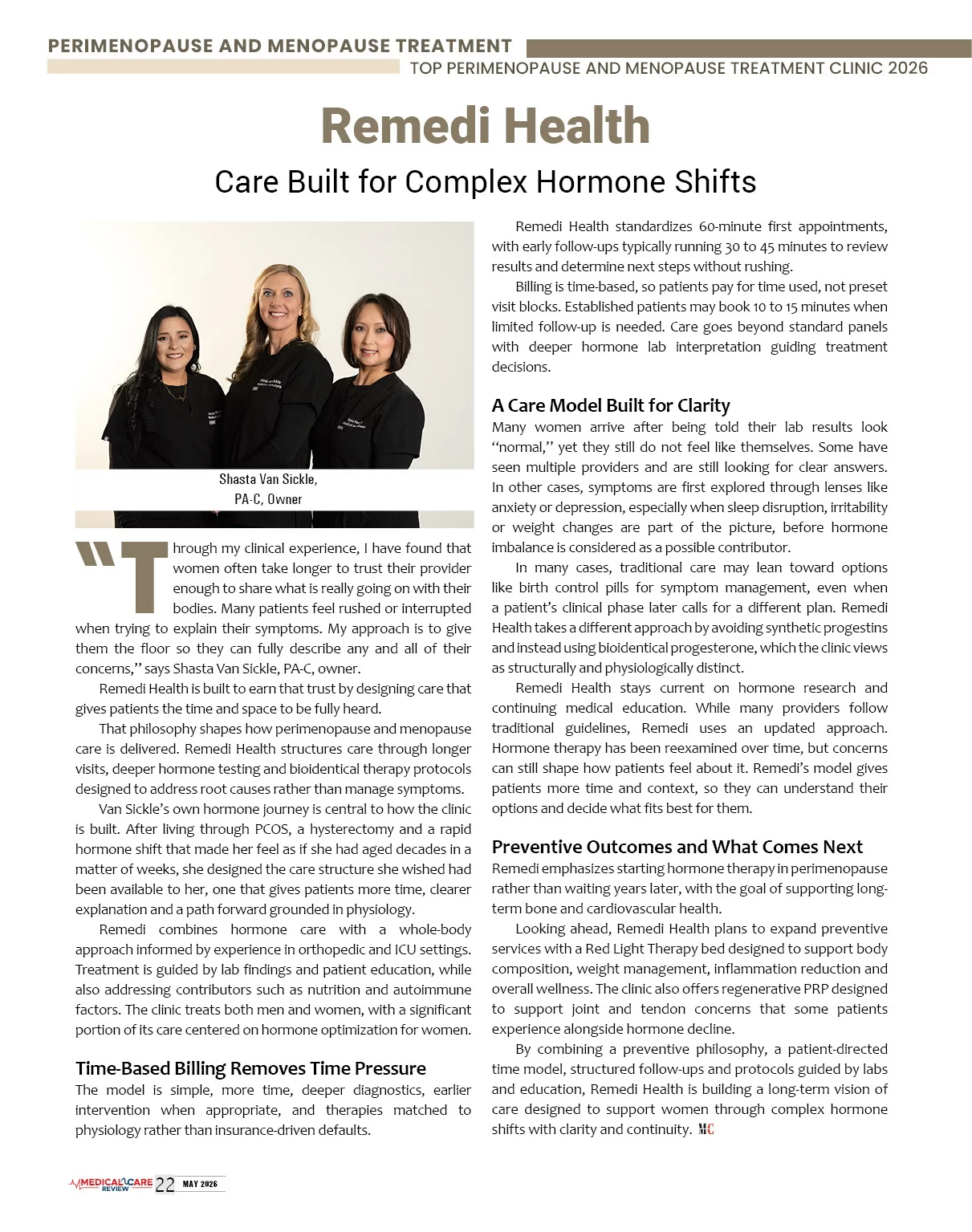
 Shasta Van Sickle, PA-C, Owner
How does giving patients time to speak change hormone care experiences?
“Through my clinical experience, I have found that women often take longer to trust their provider enough to share what is really going on with their bodies. Many patients feel rushed or interrupted when trying to explain their symptoms. My approach is to give them the floor so they can fully describe any and all of their concerns,” says Shasta Van Sickle, PA-C, owner.
Remedi Health is built to earn that trust by designing care that gives patients the time and space to be fully heard.
Why does Remedi Health use longer visits and deeper hormone testing?
That philosophy shapes how perimenopause and menopause care is delivered. Remedi Health structures care through longer visits, deeper hormone testing and bioidentical therapy protocols designed to address root causes rather than manage symptoms.
Van Sickle’s own hormone journey is central to how the clinic is built. After living through PCOS, a hysterectomy and a rapid hormone shift that made her feel as if she had aged decades in a matter of weeks, she designed the care structure she wished had been available to her, one that gives patients more time, clearer explanation and a path forward grounded in physiology.
Remedi combines hormone care with a whole-body approach informed by experience in orthopedic and ICU settings. Treatment is guided by lab findings and patient education, while also addressing contributors such as nutrition and autoimmune factors. The clinic treats both men and women, with a significant portion of its care centered on hormone optimization for women.
Time-Based Billing Removes Time Pressure
The model is simple, more time, deeper diagnostics, earlier intervention when appropriate, and therapies matched to physiology rather than insurance-driven defaults.
Billing is time-based, so patients pay for time used, not preset visit blocks. Established patients may book 10 to 15 minutes when limited follow-up is needed. Care goes beyond standard panels with deeper hormone lab interpretation guiding treatment decisions.
A Care Model Built for Clarity
Why do many patients seek hormone evaluation after normal lab results?
Many women arrive after being told their lab results look “normal,” yet they still do not feel like themselves. Some have seen multiple providers and are still looking for clear answers. In other cases, symptoms are first explored through lenses like anxiety or depression, especially when sleep disruption, irritability or weight changes are part of the picture, before hormone imbalance is considered as a possible contributor.
In many cases, traditional care may lean toward options like birth control pills for symptom management, even when a patient’s clinical phase later calls for a different plan. Remedi Health takes a different approach by avoiding synthetic progestins and instead using bioidentical progesterone, which the clinic views as structurally and physiologically distinct.
Remedi Health stays current on hormone research and continuing medical education. While many providers follow traditional guidelines, Remedi uses an updated approach. Hormone therapy has been reexamined over time, but concerns can still shape how patients feel about it. Remedi’s model gives patients more time and context, so they can understand their options and decide what fits best for them.
Preventive Outcomes and What Comes Next
How can early hormone therapy support long-term bone and cardiovascular health?
Remedi emphasizes starting hormone therapy in perimenopause rather than waiting years later, with the goal of supporting long-term bone and cardiovascular health.
Looking ahead, Remedi Health plans to expand preventive services with a Red Light Therapy bed designed to support body composition, weight management, inflammation reduction and overall wellness. The clinic also offers regenerative PRP designed to support joint and tendon concerns that some patients experience alongside hormone decline.
By combining a preventive philosophy, a patient-directed time model, structured follow-ups and protocols guided by labs and education, Remedi Health is building a long-term vision of care designed to support women through complex hormone shifts with clarity and continuity.
What Should Patients Know About Perimenopause and Menopause Treatment Clinics?
Perimenopause and Menopause Treatment Clinics provide focused care for women experiencing hormonal changes before, during and after menopause. Symptoms can vary widely and may include sleep disruption, mood changes, hot flashes, fatigue, weight changes and other physical or emotional concerns. A useful evaluation looks at the person's symptoms, health history and treatment goals rather than assuming every patient needs the same approach. Remedi Health takes this patient-directed approach by giving patients more time to explain what they are experiencing and by using laboratory findings and education to guide care. Its model is designed around longer consultations, deeper hormone assessment and treatment plans that consider individual physiology.
How Does Remedi Health Approach Perimenopause And Menopause Care?
Remedi Health builds its care model around longer visits and detailed discussions about symptoms, health history and possible contributors to hormonal changes. The clinic uses 60-minute initial appointments, followed by shorter visits to review results and determine next steps. Perimenopause and Menopause Treatment Clinics can use this type of extended consultation to give patients more opportunity to describe symptoms that may be difficult to capture during a brief appointment. Remedi Health also considers factors such as nutrition and autoimmune conditions alongside hormone findings. Its approach is led by Shasta Van Sickle, PA-C, who focuses on women's hormone health and preventive care.
What Treatments May Be Considered During Perimenopause And Menopause?
Treatment options depend on symptoms, medical history, clinical findings and individual goals. Perimenopause and Menopause Treatment Clinics may discuss hormone therapy when appropriate, along with lifestyle measures and other approaches that address specific concerns. Remedi Health provides bioidentical hormone therapy and focuses on evaluating hormone levels as part of a broader health assessment. Its services also include thyroid care, osteoporosis support, cardiovascular considerations and functional medicine. Patients should ask what each treatment is intended to address, what benefits and limitations are expected and how progress will be reviewed. Hormone therapy should be considered through an individualized clinical discussion rather than treated as a universal solution.
Why Does Individualized Assessment Matter In Menopause Care?
Two people can experience menopause very differently, even when their symptoms appear similar. Perimenopause and Menopause Treatment Clinics should therefore consider the person's medical history, symptoms and treatment response when developing a care plan. Remedi Health uses detailed hormone evaluation and describes its diagnostic approach as going beyond routine screening, including biochemical analysis of hormone levels and intracellular vitamin levels. Its care also considers conditions such as autoimmune disease, thyroid concerns and bone health. This broader assessment can help clinicians look at several factors that may influence how a patient feels rather than attributing every symptom to menopause alone.
How Can Earlier Care Support Women During Perimenopause?
Perimenopause can begin before periods stop completely, and symptoms may develop gradually or change over time. Perimenopause and Menopause Treatment Clinics can help women understand these changes and discuss appropriate care before symptoms become difficult to manage. Remedi Health places particular emphasis on preventive care for women navigating perimenopause and menopause. Its clinical model focuses on identifying hormonal changes, explaining findings and discussing treatment options based on individual circumstances. The clinic also considers longer-term areas such as bone health and cardiovascular health as part of its broader hormone-care perspective. Patients can use these discussions to understand what is changing and when follow-up may be appropriate.
What Should Patients Look For When Choosing A Menopause Clinic?
When comparing Perimenopause and Menopause Treatment Clinics, patients should look at provider qualifications, consultation time, assessment methods, treatment options and follow-up practices. It is helpful to ask how symptoms are evaluated, whether testing is appropriate, how treatment decisions are made and how changes will be monitored. Remedi Health combines hormone-focused care with functional medicine and provides services related to menopause, osteoporosis, thyroid health and cardiovascular concerns. Its approach also emphasizes patient education and sufficient consultation time for discussing symptoms and treatment choices. A suitable clinic should explain available options in clear language, discuss potential benefits and limitations and give patients an active role in decisions about their care.
